
Day 12 - The Good Christmas
The postcard was fourth in the stack.
Clara had avoided it.
Not deliberately.
That was the lie she told herself.
The first postcard had been easy.
The diner.
Beginning.
The second had made her smile.
The twelve-dollar tree.
The third contained a road trip and the first hint that they were beginning to want different things.
But the fourth—
The fourth frightened her.
Because she knew what came after it.
Not immediately.
That was the point.
There had still been time.
Almost a year, actually.
Enough time for them to exchange Christmas gifts, dance in her mother's kitchen— and be happy.
Really happy.
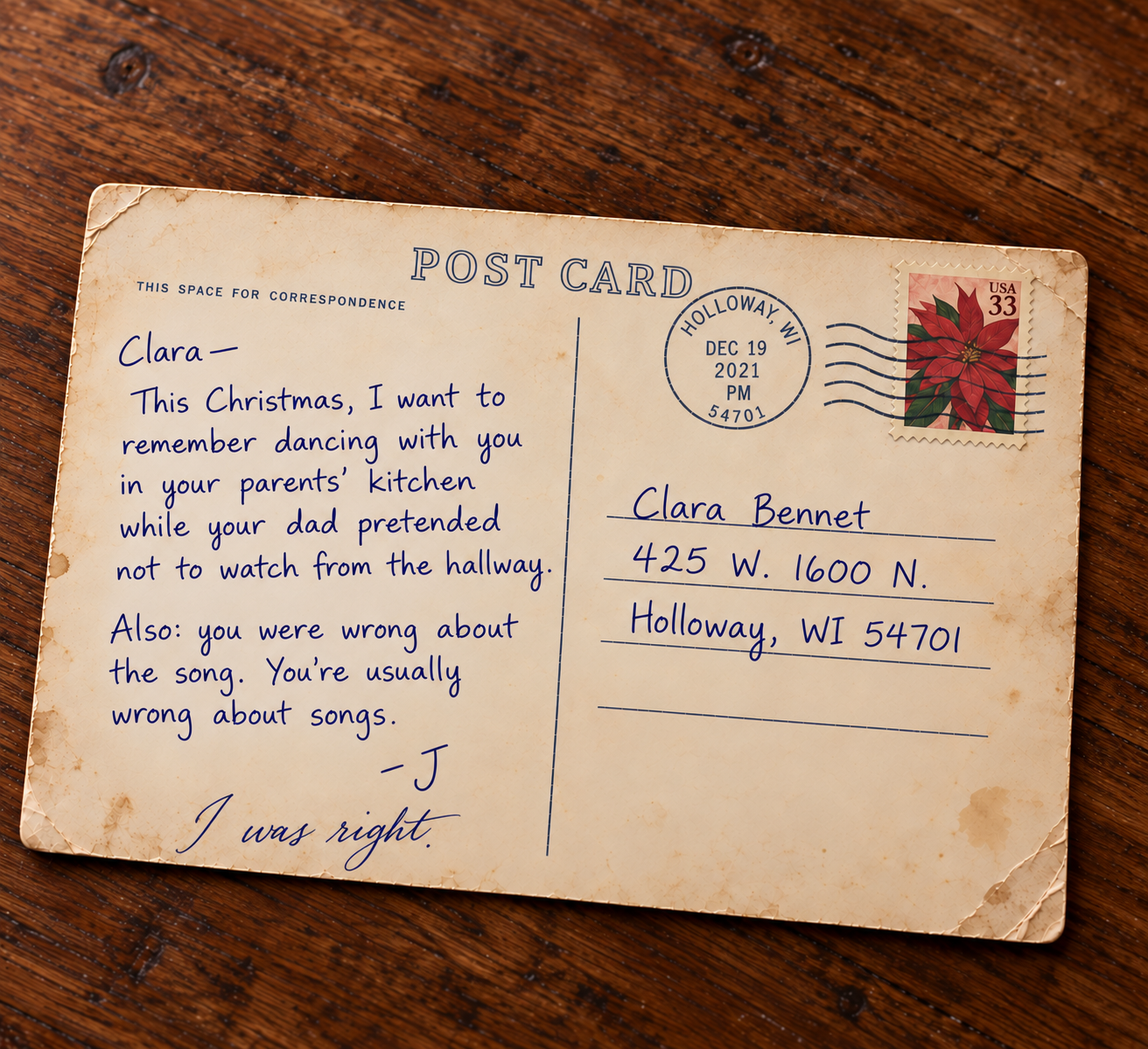
Clara sat at the dining table and turned the postcard over.
Jack's handwriting.
This Christmas, I want to remember dancing with you...
She smiled.
Then covered her eyes.
“Oh man.”
She remembered the song.
He had been wrong.
Obviously.
Christmas Eve 2001 began with Clara's father swearing at outdoor lights.
This was tradition.
Every year, Henry Bennett waited until December twenty-fourth to decide some portion of the exterior lighting was inadequate.
Every year, Evelyn reminded him that Christmas Eve was not traditionally considered the ideal moment for electrical expansion.
Every year, he ignored her.
Clara and Jack arrived at the house just after four.
Henry stood on a ladder beneath the porch roof holding approximately thirty feet of lights.
“Don't say anything,” he called.
Clara hadn't spoken.
“Wasn't going to.”
“You had a look.”
“I inherited the look.”
Evelyn opened the front door.
“From me.”
She held a glass of wine.
“It’s the only useful thing I gave her.”
“Mom.”
“What? You have your father's knees.”
Henry looked down from the ladder.
“Nothing wrong with my knees.”
Evelyn took a sip.
“You're standing on a ladder in snow at sixty-one. We'll revisit that later.”
Jack was laughing.
Clara turned.
“Do not encourage them.”
“I love your parents.”
“That's because you don't belong to them.”
Evelyn looked at him.
“We can arrange paperwork.”
“Mom.”
Jack grinned.
“I'll think about it.”
Traitor.
Inside, the house smelled like butter, pine, and whatever her mother had been cooking for six hours.
Christmas music played from the stereo.
The dining table was already set.
The old table.
The one Clara was sitting at now, twenty-five years later, rebuilt into something different.
Back then, the burn mark from Thanksgiving 1987 was hidden under a tablecloth.
Clara didn't know her initials were underneath it.
She didn't know her father would someday ask Jack to save them.
She didn't know any of that.
Memory was cruel partly because it came with information the original moment did not have.
She remembered walking through the kitchen and seeing only a kitchen.
Not the future absence of her mother.
Not her father's empty chair.
Not the table becoming an heirloom.
Just home.
Perhaps that was mercy.
“You're on potatoes,” Evelyn told Jack.
Jack took off his coat.
“Why?”
“Because Clara peels them like she's angry.”
“I am standing right here.”
Her mother pointed toward the sink.
“Observe.”
Clara picked up a potato.
Peeled it.
Evelyn watched.
“See?”
Jack nodded thoughtfully.
“Lot of waste.”
Clara stared at him.
“Choose your next words carefully.”
He took the peeler.
“I'd like to live.”
“Good.”
She handed him the potato.
He kissed her temple on the way past.
Small.
Automatic.
Her mother saw.
Clara knew because Evelyn suddenly became extremely interested in arranging parsley.
“Don't,” Clara said.
“I didn't say anything.”
“You thought loudly.”
Evelyn smiled.
Jack whispered, “The look.”
Clara elbowed him.
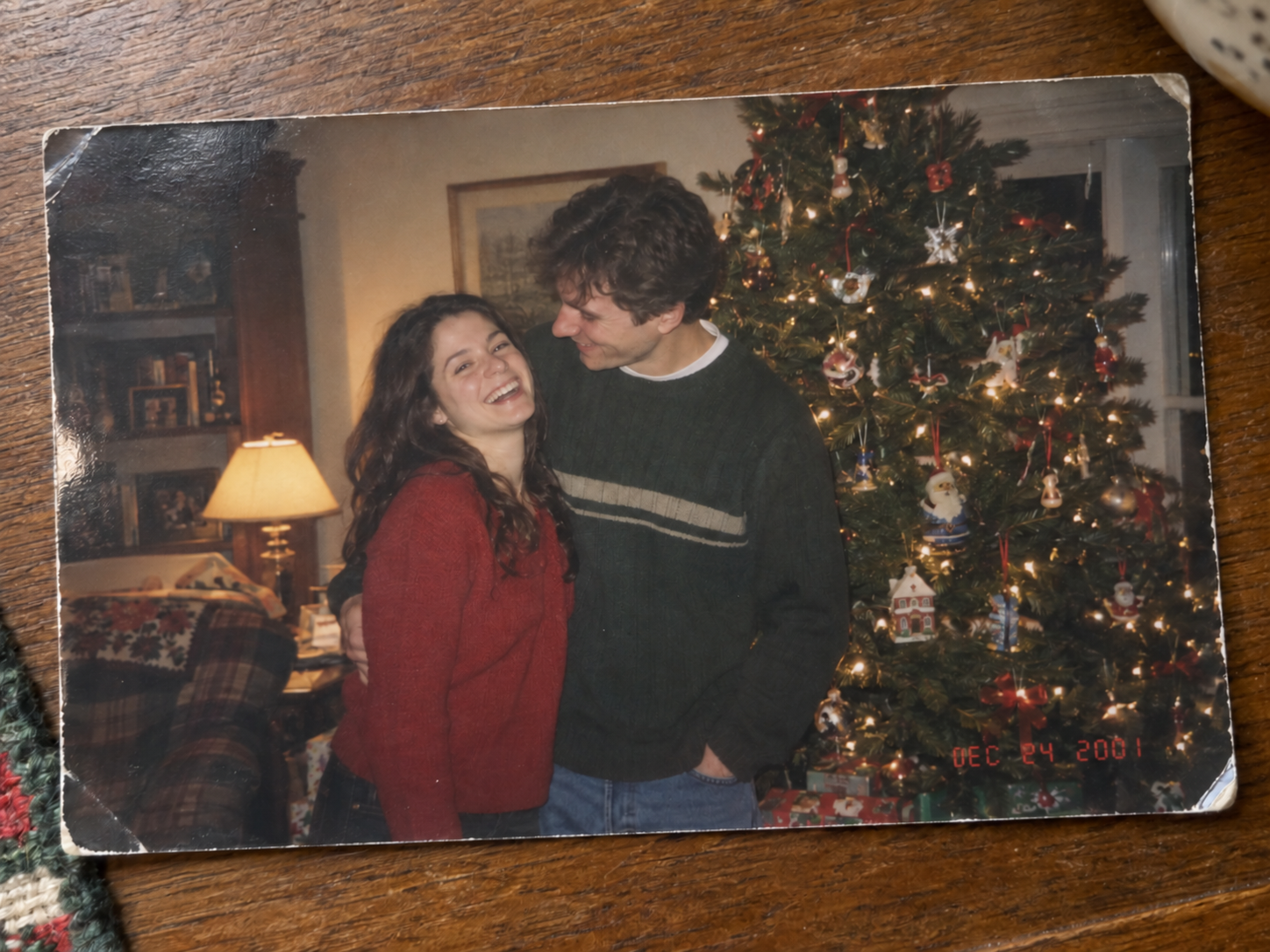
After dinner, Henry insisted on taking photos.
Also tradition.
“Jack. Over there.”
Jack looked around.
“Where?”
“By Clara.”
Clara laughed.
“That narrows it down.”
Henry waved toward the tree.
“Both of you.”
Evelyn sat on the couch.
“Henry, they are adults. Stop arranging them.”
“I'm taking one picture.”
“You've taken thirty-seven.”
“Digital cameras don't cost film.”
“This is the worst thing technology has ever done.”
Jack put his arm around Clara.
Henry lifted the camera.
“Closer.”
Clara stared.
“Dad.”
“You've been dating for three years. I know what happens.”
“Henry,” Evelyn warned.
Jack choked on a laugh.
Clara covered her face.
“I hate this family.”
“No you don't,” her father said.
Click.
That photograph would later end up in the box.
Not posed properly.
Clara still laughing.
Jack looking down at her.
His arm around her waist.
The tree behind them.
At twenty-two, Clara would have rejected it because she was not looking at the camera.
At forty-seven, it would become one of her favorites.
Around nine, Evelyn put on an old record.
Actual vinyl.
She had been rediscovering albums in the basement and behaving as if she'd personally invented analog sound.
Clara was helping clear dishes.
Jack dried.
Henry had disappeared somewhere, claiming he needed to check the lights.
“You're putting those away wrong,” Clara said.
Jack looked at the cabinet.
“They're plates.”
“Small ones go on the right.”
“Why?”
“Because that's where they go.”
“Says who?”
“My mother.”
Evelyn called from the living room:
“I don't care.”
Clara raised her voice.
“She's lying.”
“I am not.”
Jack moved the plates to the left.
Clara moved them back.
“You're exhausting.”
“You're controlling.”
“You knew that.”
“True.”
He smiled.
She tried not to.
Failed.
Then the song changed.
Clara stopped.
“Oh.”
Jack closed the cabinet.
“What?”
“This one.”
She turned the volume up.
He listened.
“You told me you hated this song.”
“I told you it was overplayed.”
“You said, and I quote, ‘If I hear this one more time, I’m driving into Lake Michigan.’”
“That was before.”
“Before what?”
“Now.”
Jack laughed.
“That is not an explanation.”
She held out her hand.
“Dance with me.”
He stared at it.
“No.”
Clara blinked.
“No?”
“Your parents are twenty feet away.”
“So?”
“So Henry will photograph it.”
“Let him.”
Jack narrowed his eyes.
“Who are you?”
“Come on.”
She caught his hand.
He resisted exactly long enough to establish plausible deniability.
Then let her pull him into the middle of the kitchen.
“You don't even dance,” he said.
“Neither do you.”
“Exactly.”
“Then expectations are low.”
She put her arms around his neck.
Jack's hands settled at her waist.
And they moved.
Barely dancing.
Mostly swaying.
Clara laughed when he stepped on her foot.
“You’re terrible.”
“You initiated this.”
“I expected adaptability.”
“Unreasonable.”
The record crackled.
The kitchen lights were too bright.
There were dishes still in the sink.
Her mother was talking to someone in the living room.
Her father's slippers were visible in the hallway.
Nothing about it was cinematic.
That was why Clara remembered it.
Jack looked at her.
Not past her.
Not toward anything else.
At her.
“What?” she asked.
“Nothing.”
“You're looking at me.”
“Am I not supposed to?”
“Not like that.”
“What way?”
Clara smiled.
She suddenly felt self-conscious.
“Never mind.”
Jack pulled her slightly closer.
“No.”
“No what?”
“No never mind.”
She laughed.
“You're annoying.”
“I know.”
“What were you thinking?”
He considered pretending.
She could see it.
Then didn't.
“That I love you.”
Simple.
No performance.
Clara's breath caught even though he had said it hundreds of times.
Maybe because sometimes the words landed differently.
“I love you too.”
“I know.”
She leaned back.
“Terrible response.”
Jack smiled.
“I love hearing you say it.”
“Better.”
“Thank you.”
Clara rested her head against him.
They kept moving.
And for a few minutes, there was no Chicago.
No Holloway.
No future to negotiate.
Just one kitchen.
One song.
One person.
The simplicity of that would later seem almost impossible.
Henry was watching from the hallway.
Of course he was.
Clara caught him.
“Dad.”
He immediately looked toward the ceiling.
“I’m going upstairs.”
“You were spying.”
“I was walking.”
“You stopped.”
“Needed to remember why I came in.”
Jack laughed against Clara's hair.
Henry disappeared.
Clara looked up.
“You think that's funny?”
“Very.”
“You realize he's evaluating you constantly.”
“I like Henry.”
“He likes you too.”
Jack's expression softened.
“I know.”
At the time, Clara did not understand how much that relationship would outlast theirs.
She couldn't have.
Later, they sat on the living room floor exchanging gifts.
Her parents had gone upstairs.
Jack handed Clara a rectangular package.
Poorly wrapped.
“Did you do this?”
“Yes.”
“You build furniture.”
“Not paper.”
Clara tore it open.
A leather portfolio.
Beautiful.
Simple.
Dark brown.
Her initials stamped subtly in one corner.
C.B.
She ran her fingers over them.
“Jack.”
“For clippings.”
She looked up.
“What?”
“When you're famous.”
She laughed.
“I am not going to be famous.”
“Fine. When your work is famous.”
Something about that distinction made her love him more.
She opened it.
Inside were clear sleeves for magazine pages.
Writing samples.
Photographs.
Applications.
The pieces of a career she had not built yet.
“You made this?”
“The leather guy next to Elias's shop helped.”
“You designed it?”
“Yes.”
She stared.
“You're helping me leave.”
Jack's smile changed.
Only slightly.
“You're already leaving.”
The room went quiet.
Not badly.
Just honestly.
Clara looked down at the portfolio.
“Come with me.”
There it was again.
Not a question.
Not quite.
Jack sat across from her.
“Clara.”
“I know. I know.”
She closed the portfolio.
“Not tonight.”
He nodded.
“Not tonight.”
She leaned forward and kissed him.
The future could wait until after Christmas.
Surely that was allowed.
Her gift to Jack was a set of expensive drafting pencils she'd bought with money she absolutely should have used for textbooks.
And a notebook.
On the first page, she'd written:
For the things you're going to make.
Jack read it.
Then looked at her.
For once, no joke.
He kissed her.
Years later, Clara would wonder whether that notebook still existed.
She would not ask.
Not yet.
The postcard arrived at Clara's parents' house on December twenty-seventh.
Her father handed it to her over breakfast.
“Your boyfriend.”
Clara rolled her eyes.
“He has a name.”
“I know. I like him.”
Henry went back to his newspaper.
Clara turned over the card.
This Christmas, I want to remember dancing with you in your parents’ kitchen while your dad pretended not to watch from the hallway.
She smiled.
Then reached the part about the song.
“You're wrong,” she said to the postcard.
Henry lowered the newspaper.
“What?”
“Nothing.”
Clara grabbed a pen.
Under Jack's message, she wrote:
I was right.
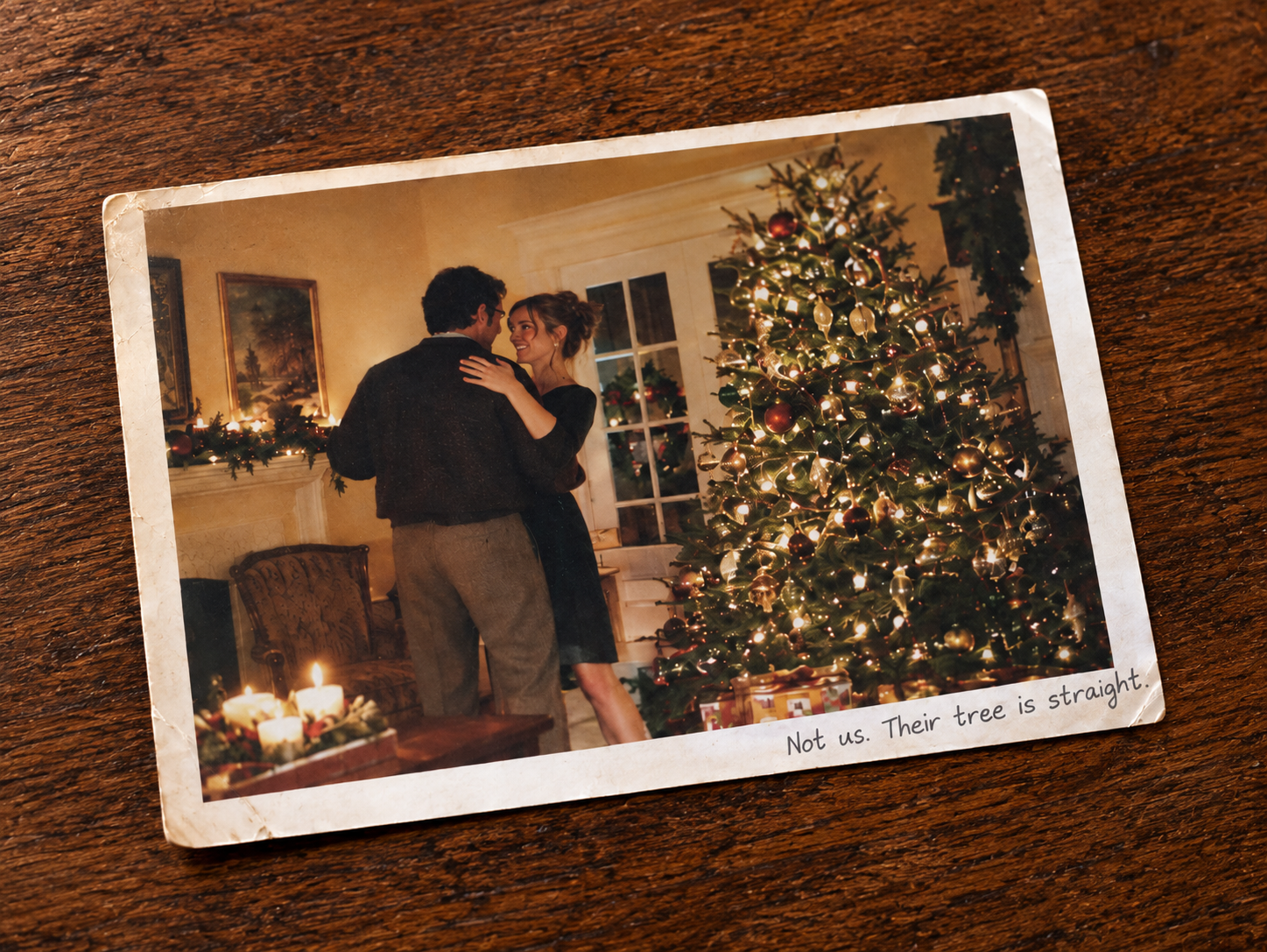
Present-day Clara sat at the same table and read the line again.
I was right.
She laughed softly.
“Probably not.”
That was becoming a theme.
The doorbell rang.
Clara looked up.
She wasn't expecting anyone.
For approximately one and a half seconds, she hoped it was Jack.
That annoyed her.
She opened the door.
Realtor.
Of course.
“Hi!”
Clara smiled with professional enthusiasm.
“Hi.”
“I know we said Monday, but I was nearby and wondered if I could take a quick look?”
Clara stepped back.
“Sure.”
The realtor walked through the house making notes.
Paint.
Staging.
Decluttering.
Photographs.
Listing timing.
Clara followed.
At the dining room, she stopped.
“Oh, this table is gorgeous.”
Clara looked at it.
“Thank you.”
“Will you be taking it?”
The question was obvious.
Clara had not considered it.
The realtor continued.
“It works beautifully in the room, but for staging we can bring something in if you're keeping it.”
Clara touched the back of a chair.
“I hadn't decided.”
“Well, no rush.”
The realtor moved on.
Clara did not.
Taking the table to Chicago had never crossed her mind.
Because it was large.
Because her apartment already had a dining table.
Because shipping it would be ridiculous.
Because—
She looked underneath.
She couldn't leave it.
The realization was immediate.
Absolute.
“Damn it.”
From the next room:
“Everything okay?”
“Yes.”
Clara smiled.
“Just found something else I'm keeping.”
That evening, Jack texted.
Theo wants to know whether you’re actually correcting the Ash caption.
Clara smiled.
Tell Theo editorial corrections require documentation.
He says he has six years of emotional damage.
Denied.
Cold.
She looked at the fourth postcard.
Then typed:
I read Christmas 2001 today.
There was a pause.
Kitchen?
Of course he remembered.
Kitchen.
Another pause.
Your dad absolutely was watching.
I know.
You said he wasn’t.
I was protecting his dignity.
Too late.
Clara smiled.
Then:
Do you remember what we danced to?
Jack responded:
Yes.
You were wrong about it.
Incorrect.
Still wrong twenty-five years later. Impressive.
She laughed.
Then stared at the next message before she sent it.
That was a good Christmas.
Jack took longer this time.
It was.
Clara felt something settle.
Not ache exactly.
Something softer.
She typed:
I think sometimes I remembered the ending so clearly that I forgot we were happy before it.
The three dots appeared.
Stopped.
Returned.
We were happy for a long time.
Clara swallowed.
Then:
Yes.
Jack replied:
That matters too.
She stared at the sentence.
That mattered too.
Not proof they should have stayed together.
Not evidence that everything after had been wrong.
Just part of the truth.
Clara looked around the room.
This story—whatever it was becoming—did not need to rewrite the ending to honor what came before it.
That felt important.
The next morning, while measuring the dining table to determine whether it would fit in her Chicago apartment—
it would, barely—
Clara noticed something protruding from the back of the box.
A photograph.
She pulled it free.
Christmas 2001.
Her father's picture.
The one by the tree.
Clara was laughing.
Jack's arm around her waist.
He was not looking at the camera.
He was looking at her.
She sat down.
At twenty-two, she had probably complained that the picture was unusable.
At forty-seven, she couldn't imagine why.
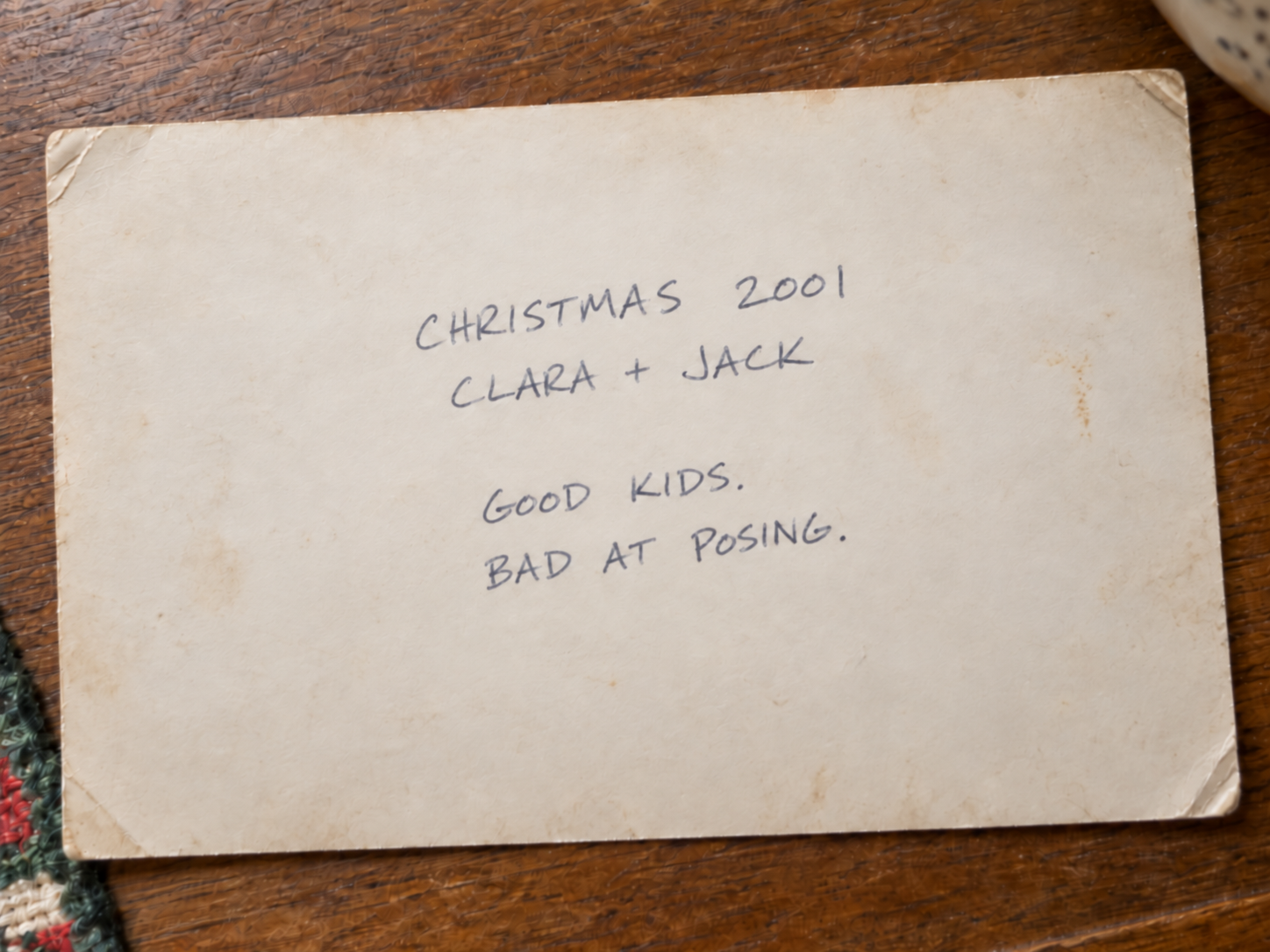
She turned it over.
Her father's handwriting.
Christmas 2001
Clara + Jack
Then underneath:
Good kids.
Bad at posing.
Clara smiled.
“Thanks, Dad.”
She placed the photograph beside the postcard.
And for once, did not look for what went wrong next.
She let the good Christmas remain good.
Tomorrow:
THE OTHER HALF
For twelve days, Clara has been opening the things Jack once sent her.
Tomorrow, she discovers that Jack kept the things she sent him.
And seeing herself through twenty-two-year-old Clara's words may be much more uncomfortable than reading his.